
Many people suffer from knee or hip pain. Often, the pain comes from osteoarthritis, wearandtear, injury, or old age. When the pain becomes severe and affects day-to-day life, joint replacement surgery (also called arthroplasty) may be the best solution. This blog helps you understand when it’s time for knee or hip replacement in simple English.
If you live in Hyderabad and are looking for an Orthopaedics Surgeon Hyderabad or Orthopedic Doctors in Hyderabad, this article will help you decide when to consult them.
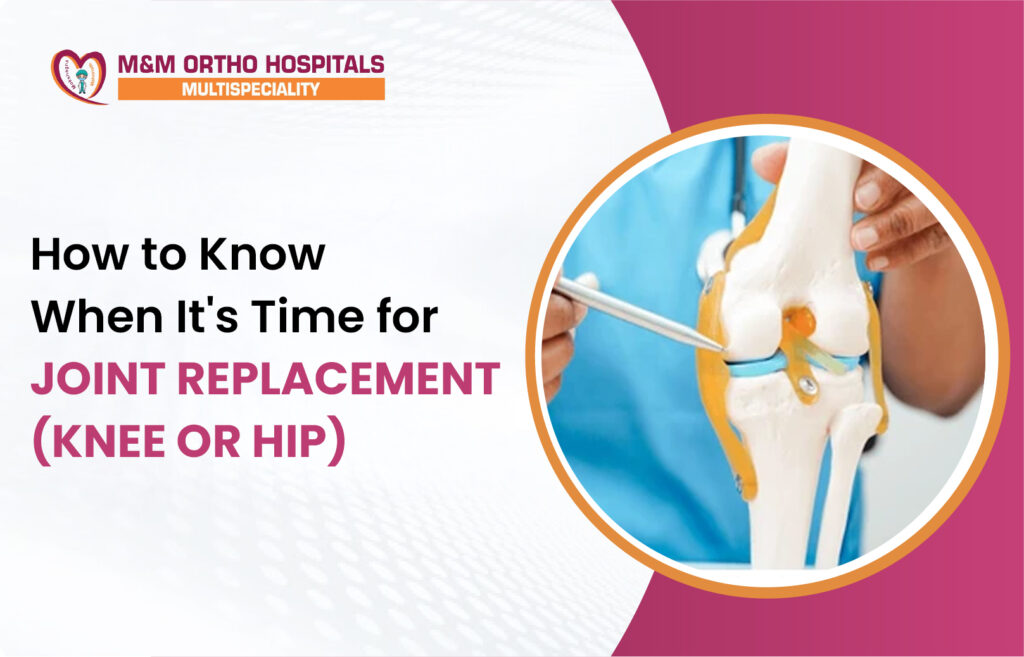

1. What is Joint Replacement?
- Hip replacement removes the damaged hip joint and replaces it with metal or plastic parts. It helps restore movement and reduce pain.
- Knee replacement replaces worn or damaged surfaces of the knee joint with artificial parts. Recovery can take several weeks or months.
The goal is to relieve pain and help you move comfortably again.

2. Common treatment before surgery
Before thinking about surgery, doctors usually try conservative treatments:
- Pain medicines (NSAIDs)
- Physical therapy and exercises
- Injections (cortisone)
- Assistive devices (walker, brace)
- Weight loss and lifestyle changes
You should consider surgery only after these have not helped enough.

3. Signs that it may be time for joint replacement
A. Severe pain that affects daily life
Persistent knee or hip pain that won’t go away with rest, medicine or therapy may signal joint replacement is needed. Pain at night, or pain that wakes you up, are serious signs.
B. Loss of function or mobility
If you struggle with basic tasks—walking, climbing stairs, bending, getting in/out of vehicle, or putting on socks—this could mean your joint has lost function.
C. Nonsurgical treatments no longer help
If medications, physical therapy, lifestyle changes, or injections stop giving relief, surgery may be the next step.
D. Emotional burden and fatigue
Living with constant pain can affect mood and mental health. If joint pain is wearing you down emotionally and mentally, joint replacement can help improve quality of life.
E. Advanced joint damage seen on Xrays
Your doctor will take Xrays or MRI scans. If imaging shows bone-on-bone contact, narrowing of the joint space, or advanced arthritis, that is a sign replacement may be needed.
F. Side effects from longterm medicines
If pain medications cause side-effects (like stomach pain or kidney issues), and pain is still severe, surgery may be safer long-term.

4. Specific signs for Hip Replacement
- Hip or groin pain that spreads down the thigh or into buttocks
- Stiffness or difficulty rotating or bending the hip
- Trouble standing on one leg or walking short distances
- Sleep-disturbing pain or pain at rest

5. Specific signs for Knee Replacement
- Persistent knee pain, often worse when walking or climbing stairs
- Crepitus (cracking or grinding sounds) when moving the knee
- Stiffness or inability to bend or straighten the knee
- Pain that does not improve with antiinflammatory drugs or therapy
6. Age and lifestyle: Who needs joint replacement?
- Many patients getting hip or knee replacements are in their 50s to 80s, but younger people are increasingly having these surgeries early due to active lifestyles and early arthritis.
- Modern implants can last 20–30 years. So surgery at age 50 may still be a good decision.

7. Risks and Recovery
- Joint replacement is major surgery, with possible risks like infection, blood clots, nerve injury, stiffness, or even implant loosening. Overall complications happen in a small percentage of patients.
- Recovery includes hospital stay, pain management, and physical therapy for weeks to months. Assistive aids like walkers or canes may help early on.

8. Choosing the Right Specialist in Hyderabad
If you’re in Hyderabad, look for an Orthopaedics Surgeon Hyderabad or Orthopedic Doctors in Hyderabad who specialize in joint replacement (knee or hip). You want someone with experience and good training. Ask questions like:
- Are they fellowshiptrained in joint replacement?
- How many surgeries do they perform each year?
- Which hospital do they operate at?
- What is their success rate and complication rate?
- Do they work with a dedicated rehabilitation team?

9. A Clear StepbyStep Guide
Here’s a simple guide to help you decide:
- Track your pain and daily limitations for a few weeks.
- See your primary doctor or family physician.
- Try non-surgical treatments: medicines, therapy, injections.
- If no improvement, get Xrays or MRI taken.
- If imaging shows advanced arthritis and pain still limits daily life:
- Consult an Orthopaedics Surgeon Hyderabad—ideally one with strong joint replacement experience.
- At consultation, discuss:
- Your pain level, mobility loss, sleep issues, emotional toll
- Results of imaging tests
- What options are left (partial replacement, total replacement)
- If surgery is agreed, prepare for:
- Hospital planning
- Pre-surgery exercises
- Recovery and physical therapy plan
- Helping frame for daily life recovery at home

10. Why Early Consultation Helps
- Waiting too long may lead to muscle wasting, decreased mobility, and poor results.
- Early surgery, when well timed, often leads to faster recovery.
- Talk to an Orthopaedic Surgeon Hyderabad early. They can guide you when it’s the right time.

Conclusion
Knowing when to choose knee or hip replacement surgery is about how much pain impacts your life, how much mobility you have lost, and whether nonsurgical treatments help. If you live in Hyderabad, seek qualified Orthopaedic Doctors in Hyderabad or an experienced Orthopaedics Surgeon Hyderabad to guide you.
Key signs you need to consult a surgeon:
- Pain limits walking, climbing stairs, sleeping
- Daily tasks become difficult
- Medicines and therapy don’t help
- Imaging shows advanced joint damage
Surgery is a big step but can restore your quality of life. If you meet these criteria, contact skilled professionals in Hyderabad. Early decision-making and expert care can make the recovery easier and more successful. Many people suffer from knee or hip pain. Often, the pain comes from osteoarthritis, wearandtear, injury, or old age. When the pain becomes severe and affects day-to-day life, joint replacement surgery (also called arthroplasty) may be the best solution. This blog helps you understand when it’s time for knee or hip replacement in simple English.
If you live in Hyderabad and are looking for an Orthopaedics Surgeon Hyderabad or Orthopedic Doctors in Hyderabad, this article will help you decide when to consult them.

1. What is Joint Replacement?
- Hip replacement removes the damaged hip joint and replaces it with metal or plastic parts. It helps restore movement and reduce pain.
- Knee replacement replaces worn or damaged surfaces of the knee joint with artificial parts. Recovery can take several weeks or months.
The goal is to relieve pain and help you move comfortably again.

2. Common treatment before surgery
Before thinking about surgery, doctors usually try conservative treatments:
- Pain medicines (NSAIDs)
- Physical therapy and exercises
- Injections (cortisone)
- Assistive devices (walker, brace)
- Weight loss and lifestyle changes
You should consider surgery only after these have not helped enough.

3. Signs that it may be time for joint replacement
A. Severe pain that affects daily life
Persistent knee or hip pain that won’t go away with rest, medicine or therapy may signal joint replacement is needed. Pain at night, or pain that wakes you up, are serious signs.
B. Loss of function or mobility
If you struggle with basic tasks—walking, climbing stairs, bending, getting in/out of vehicle, or putting on socks—this could mean your joint has lost function.
C. Nonsurgical treatments no longer help
If medications, physical therapy, lifestyle changes, or injections stop giving relief, surgery may be the next step.
D. Emotional burden and fatigue
Living with constant pain can affect mood and mental health. If joint pain is wearing you down emotionally and mentally, joint replacement can help improve quality of life.
E. Advanced joint damage seen on Xrays
Your doctor will take Xrays or MRI scans. If imaging shows bone-on-bone contact, narrowing of the joint space, or advanced arthritis, that is a sign replacement may be needed.
F. Side effects from longterm medicines
If pain medications cause side-effects (like stomach pain or kidney issues), and pain is still severe, surgery may be safer long-term.
4. Specific signs for Hip Replacement
- Hip or groin pain that spreads down the thigh or into buttocks
- Stiffness or difficulty rotating or bending the hip
- Trouble standing on one leg or walking short distances
- Sleep-disturbing pain or pain at rest

5. Specific signs for Knee Replacement
- Persistent knee pain, often worse when walking or climbing stairs
- Crepitus (cracking or grinding sounds) when moving the knee
- Stiffness or inability to bend or straighten the knee
- Pain that does not improve with antiinflammatory drugs or therapy

6. Age and lifestyle: Who needs joint replacement?
- Many patients getting hip or knee replacements are in their 50s to 80s, but younger people are increasingly having these surgeries early due to active lifestyles and early arthritis.
- Modern implants can last 20–30 years. So surgery at age 50 may still be a good decision.

7. Risks and Recovery
- Joint replacement is major surgery, with possible risks like infection, blood clots, nerve injury, stiffness, or even implant loosening. Overall complications happen in a small percentage of patients.
- Recovery includes hospital stay, pain management, and physical therapy for weeks to months. Assistive aids like walkers or canes may help early on.

8. Choosing the Right Specialist in Hyderabad
If you’re in Hyderabad, look for an Orthopaedics Surgeon Hyderabad or Orthopedic Doctors in Hyderabad who specialize in joint replacement (knee or hip). You want someone with experience and good training. Ask questions like:
- Are they fellowshiptrained in joint replacement?
- How many surgeries do they perform each year?
- Which hospital do they operate at?
- What is their success rate and complication rate?
- Do they work with a dedicated rehabilitation team?

9. A Clear StepbyStep Guide
Here’s a simple guide to help you decide:
- Track your pain and daily limitations for a few weeks.
- See your primary doctor or family physician.
- Try non-surgical treatments: medicines, therapy, injections.
- If no improvement, get Xrays or MRI taken.
- If imaging shows advanced arthritis and pain still limits daily life:
- Consult an Orthopaedics Surgeon Hyderabad—ideally one with strong joint replacement experience.
- At consultation, discuss:
- Your pain level, mobility loss, sleep issues, emotional toll
- Results of imaging tests
- What options are left (partial replacement, total replacement)
- If surgery is agreed, prepare for:
- Hospital planning
- Pre-surgery exercises
- Recovery and physical therapy plan
- Helping frame for daily life recovery at home

10. Why Early Consultation Helps
- Waiting too long may lead to muscle wasting, decreased mobility, and poor results.
- Early surgery, when well timed, often leads to faster recovery.
- Talk to an Orthopaedic Surgeon Hyderabad early. They can guide you when it’s the right time.

Conclusion
Knowing when to choose knee or hip replacement surgery is about how much pain impacts your life, how much mobility you have lost, and whether nonsurgical treatments help. If you live in Hyderabad, seek qualified Orthopaedic Doctors in Hyderabad or an experienced Orthopaedics Surgeon Hyderabad to guide you.
Key signs you need to consult a surgeon:
- Pain limits walking, climbing stairs, sleeping
- Daily tasks become difficult
- Medicines and therapy don’t help
- Imaging shows advanced joint damage
Surgery is a big step but can restore your quality of life. If you meet these criteria, contact skilled professionals in Hyderabad. Early decision-making and expert care can make the recovery easier and more successful.