
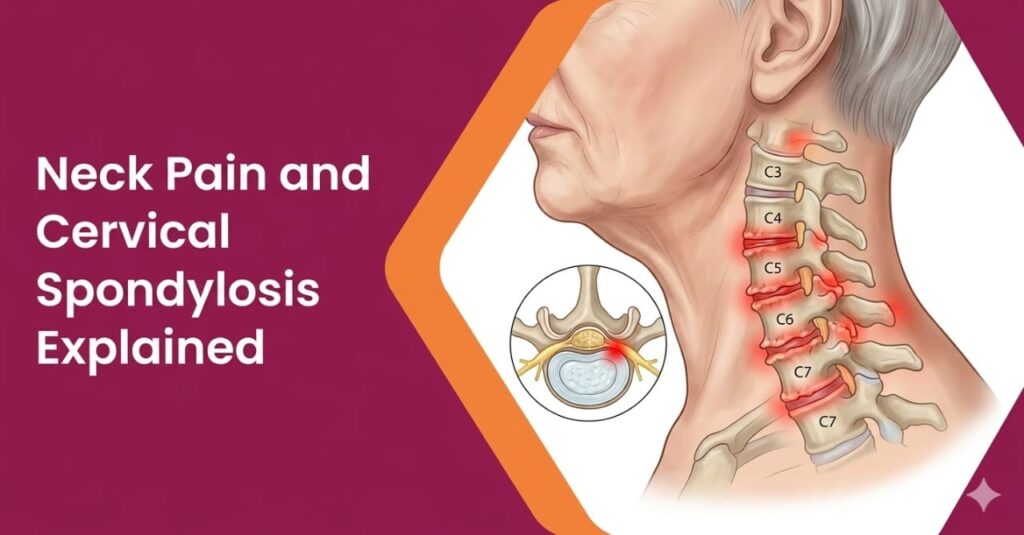
Neck pain is one of the most common musculoskeletal complaints affecting people of all ages, especially those with sedentary lifestyles, desk jobs, and increasing screen time. While occasional discomfort may resolve with rest, persistent pain could indicate an underlying condition known as cervical spondylosis. Understanding Neck Pain and Cervical Spondylosis is essential for early diagnosis, effective treatment, and preventing long-term complications. This condition refers to age-related wear and tear affecting the cervical spine, which consists of the seven vertebrae in the neck. Although it is a natural part of aging, modern lifestyle habits such as poor posture, prolonged gadget use, and lack of physical activity have contributed to its growing prevalence even among younger individuals.
Cervical Spondylosis Explained, it is essentially a form of degenerative arthritis affecting the neck. The discs that cushion the cervical vertebrae gradually lose hydration and elasticity over time, leading to Cervical Spine Degeneration. This process may result in Cervical Disc Problems, including disc bulges, herniation, and the formation of Bone Spurs in the Neck. These changes can narrow the spaces through which nerves pass, leading to Nerve Compression in Neck and causing symptoms that range from mild discomfort to significant neurological deficits.
Recognizing Cervical Spondylosis Symptoms is important for timely intervention. Common symptoms include persistent neck pain, stiffness, headaches originating from the neck, restricted movement, shoulder pain, and muscle tightness. Some individuals may also experience Tingling and Numbness in Arms, weakness in the hands, or radiating pain traveling down the arms, a condition referred to as Cervical Radiculopathy.In more advanced cases, difficulty with balance and coordination may occur if the spinal cord becomes compressed. Because these symptoms can overlap with other conditions, professional evaluation is necessary to determine the exact cause.
There are multiple Causes of Neck Pain, and cervical spondylosis is only one of them. Repetitive neck movements, poor workplace ergonomics, previous neck injuries, obesity, smoking, and genetic factors can all accelerate spinal degeneration. The primary Cervical Spondylosis Causes involve aging-related changes in the discs and joints of the neck. Over time, the cushioning discs flatten, ligaments stiffen, and the vertebral joints undergo arthritic changes. This progression is often referred to as Degenerative Disc Disease in Neck, which contributes significantly to chronic neck discomfort.
Proper Neck Pain Diagnosis begins with a detailed medical history and physical examination. Physicians assess neck mobility, muscle strength, reflexes, and neurological function. Imaging studies such as X-rays, MRI scans, and CT scans help identify structural abnormalities including Cervical Disc Disease, disc herniation, and nerve compression. Early diagnosis not only improves treatment outcomes but also prevents progression of symptoms.
Fortunately, several effective Cervical Spine Treatment Options are available. In most cases, Non-Surgical Treatment for Cervical Spondylosis provides significant relief. Conservative approaches include medications to reduce pain and inflammation, activity modification, posture correction, and physiotherapy. Neck Pain Exercises play a vital role in strengthening neck muscles, improving flexibility, and restoring mobility. Guided stretching and strengthening exercises often serve as valuable components of Neck Pain Management and promote Chronic Neck Pain Relief. Patients are also encouraged to adopt ergonomic workstations and maintain proper sleeping positions to minimize stress on the cervical spine.
Specific interventions such as heat therapy, cervical traction, and supervised rehabilitation may provide effective Stiff Neck Treatment and improve daily function. Similarly, Cervical Arthritis Treatment focuses on reducing joint inflammation while preserving mobility. When symptoms such as severe weakness, progressive neurological deficits, or persistent pain fail to respond to conservative measures, surgical intervention may be considered. Procedures designed to relieve nerve pressure and stabilize the spine can significantly improve quality of life for appropriately selected patients.
Preventive strategies are equally important. Following Neck Pain Prevention Tips such as maintaining good posture, taking frequent breaks during computer use, exercising regularly, avoiding prolonged mobile phone use with the head bent forward, and sleeping with adequate neck support can reduce the risk of cervical degeneration. Awareness and lifestyle modifications often help individuals maintain cervical spine health and prevent recurrent episodes of pain.
Conclusion:
Understanding Neck Pain and Cervical Spondylosis Explained empowers individuals to recognize early warning signs and seek appropriate care before complications develop. Whether you require expert evaluation for neck discomfort or guidance regarding comprehensive orthopedic care, consulting an experienced orthopedic doctor in Hyderabad is essential. Specialists such as a knee replacement surgeon, hip replacement surgeon, and orthopedic pediatric surgeon work collaboratively to address a wide range of musculoskeletal conditions using evidence-based approaches. For expert orthopedic consultation and personalized treatment, Dr. Madhu Reddy (Orthopedic Surgeon) at MM Ortho Hospital is committed to delivering compassionate care and advanced solutions tailored to every patient’s needs, helping individuals regain mobility, comfort, and an improved quality of life.