
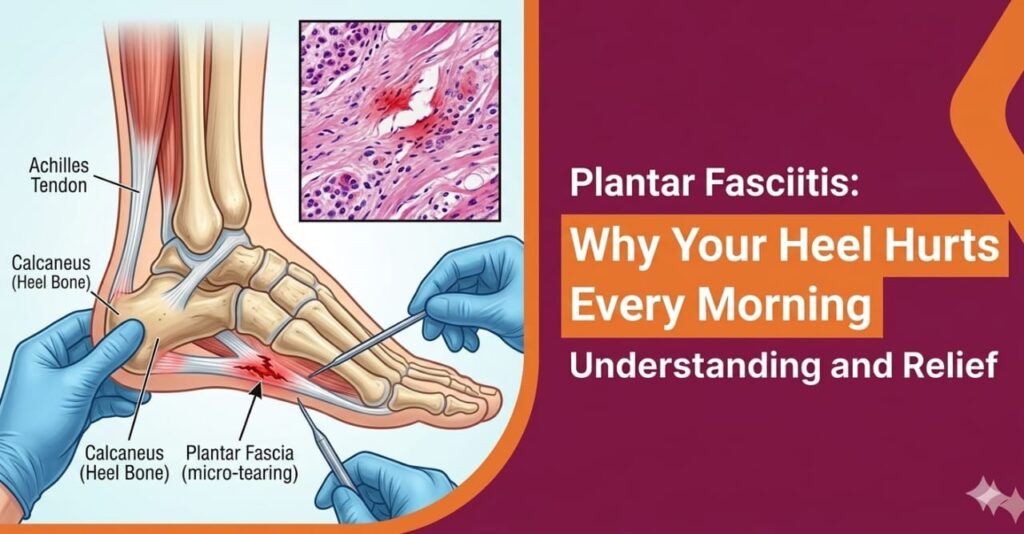
Heel pain is one of the most common foot problems affecting people of all ages. If you’ve ever taken your first few steps out of bed and felt a sharp pain in the bottom of your heel, you may be experiencing Plantar Fasciitis. This condition occurs when the plantar fascia—a thick band of connective tissue that runs from your heel bone to your toes—becomes irritated or inflamed. While the pain may ease after walking for a few minutes, it often returns after prolonged standing or physical activity. Understanding the Causes of Plantar Fasciitis, recognizing Plantar Fasciitis symptoms, and seeking timely care can help prevent chronic heel pain and restore your mobility.
What Is Plantar Fasciitis?
Plantar Fasciitis is a condition caused by inflammation of the plantar fascia, the tissue responsible for supporting the arch of the foot and absorbing the stress of walking and running. Repeated strain or excessive pressure can lead to tiny tears in the fascia, resulting in plantar fascia inflammation and discomfort. It is one of the leading foot pain causes in adults and is especially common among runners, healthcare workers, teachers, factory employees, and anyone who spends long hours on their feet.
Why Does Heel Hurt More in the Morning?
One of the hallmark signs of Plantar Fasciitis is morning heel pain or heel pain after waking up. During sleep, the plantar fascia shortens slightly as the foot remains in a relaxed position. When you take your first steps in the morning, the tissue suddenly stretches, causing sharp heel pain in the morning. Many patients also experience morning foot stiffness, making it difficult to walk comfortably during the first few minutes of the day. As the tissue warms up with movement, the pain often decreases but may return after long periods of standing or sitting.
Common Causes and Risk Factors
Several factors contribute to the development of Plantar Fasciitis. Repetitive stress from running and heel pain, walking long distances, or standing for extended periods can overload the plantar fascia. Standing for long hours foot pain is particularly common among professionals who rarely get opportunities to rest. People with flat feet and heel pain often have poor arch support, while individuals with high arches and Plantar Fasciitis may place excessive stress on the heel due to uneven weight distribution. Other risk factors include obesity, aging, wearing unsupportive footwear, tight calf muscles, and occupations requiring prolonged standing.
Symptoms of Plantar Fasciitis
The most common Plantar Fasciitis symptoms include pain in the bottom of the heel, tenderness near the heel bone, and discomfort after periods of rest. Many people notice heel pain while walking, especially during the first steps of the day or after sitting for a long time. The pain may become worse after exercise rather than during activity itself. Without proper care, the condition may progress into chronic heel pain, affecting daily routines, work performance, and overall quality of life.
How Is Plantar Fasciitis Diagnosed?
A proper Plantar Fasciitis diagnosis begins with a detailed medical history and physical examination. An orthopedic specialist evaluates the location of pain, tenderness, flexibility of the foot, and walking pattern. In most cases, clinical examination is sufficient to diagnose the condition. However, imaging tests such as X-rays or ultrasound may be recommended to rule out stress fractures, heel spurs, or other causes of persistent heel pain.
Effective Plantar Fasciitis Treatment
The good news is that most patients recover without surgery. Plantar Fasciitis treatment focuses on reducing pain, improving flexibility, and allowing the tissue to heal naturally. Rest, applying ice packs, and anti-inflammatory medications can help relieve symptoms during the early stages. Wearing supportive footwear and using orthotics for heel pain provide better arch support and reduce stress on the plantar fascia. These measures are considered effective non-surgical treatment for Plantar Fasciitis and are successful for the majority of patients.
Physical therapy also plays an important role in recovery. Regular Plantar Fasciitis exercises, including calf stretches, foot strengthening routines, and the best stretches for Plantar Fasciitis, help improve flexibility and reduce tension in the fascia. These exercises not only promote heel pain relief but also speed up Plantar Fasciitis recovery. In severe or persistent cases, advanced treatments such as corticosteroid injections, platelet-rich plasma (PRP) therapy, or shockwave therapy may be considered under medical supervision.
Preventing Heel Pain
Simple lifestyle changes can significantly improve heel pain prevention. Always wear well-cushioned shoes with proper arch support, especially if your job requires prolonged standing. Maintain a healthy body weight to reduce stress on the feet. Stretch your calves and plantar fascia before physical activity, avoid walking barefoot on hard surfaces, and gradually increase exercise intensity. Replacing worn-out footwear and taking regular breaks during long working hours can further reduce the risk of developing Plantar Fasciitis.
Conclusion
Ignoring persistent heel pain can lead to long-term discomfort and reduced mobility. If you experience recurring heel pain, foot arch pain, or severe morning heel pain, consult an experienced orthopedic doctor in Hyderabad for an accurate diagnosis and personalized treatment. At MM Ortho Hospital, patients receive comprehensive orthopedic care from specialists experienced in treating foot and ankle conditions as well as complex joint disorders. Under the guidance of Dr. Madhu Reddy (Orthopedic Surgeon), patients benefit from evidence-based care tailored to their individual needs. Whether you are seeking treatment from a knee replacement surgeon, hip replacement surgeon, or orthopedic pediatric surgeon, timely evaluation and expert care can help you recover faster, relieve pain, and return to your active lifestyle.