
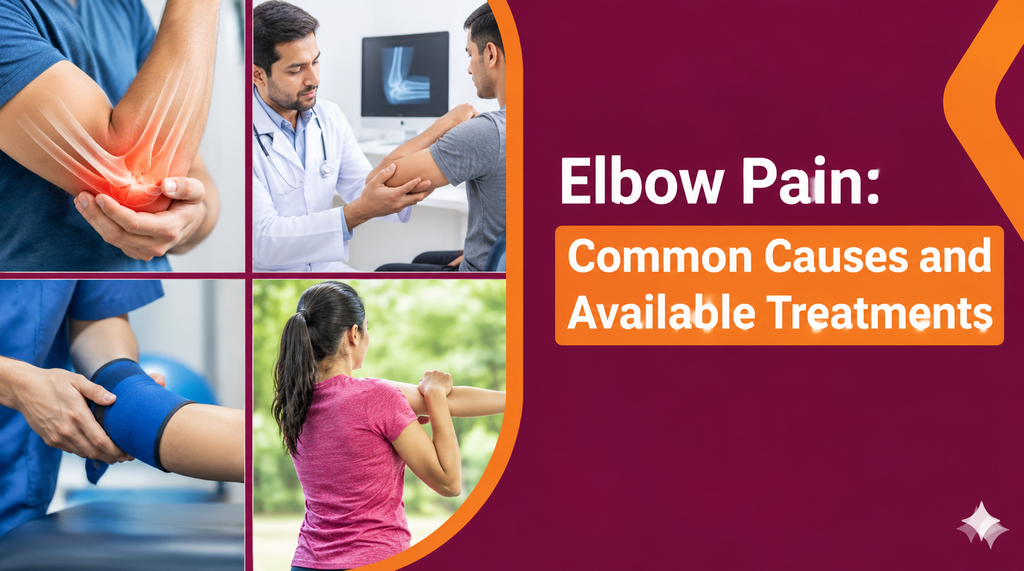
Understanding Elbow Pain
Elbow pain is a common musculoskeletal problem that can affect people of all ages. From athletes and office workers to older adults and children, discomfort around the elbow can interfere with everyday activities such as lifting objects, writing, exercising, or even simple arm movements. Elbow pain may develop gradually because of repetitive movements or occur suddenly following an injury. Understanding the elbow pain causes and getting timely medical attention can help prevent the condition from becoming chronic and affecting normal arm function.
Common Causes of Elbow Pain
There are several possible causes of elbow pain, ranging from overuse injuries to fractures and joint conditions. One of the most common conditions is tennis elbow, which occurs when the tendons on the outer side of the elbow become irritated, often due to repetitive gripping or wrist movements. Golfer’s elbow is a similar condition that affects the tendons on the inner side of the elbow. Both conditions can cause pain while lifting, gripping, or moving the arm.
Another common cause is elbow tendonitis, where inflammation or irritation of the tendons leads to discomfort and reduced movement. An elbow ligament injury may occur during sports, falls, or sudden twisting movements and can result in pain, weakness, or instability. In some cases, an elbow fracture caused by a fall or direct impact can produce severe pain, bruising, swelling, and difficulty moving the arm.
Age-related changes can also contribute to elbow problems. Elbow arthritis may cause gradual deterioration of the joint, resulting in pain, stiffness, and restricted movement. People may experience elbow stiffness, particularly after periods of inactivity. Elbow swelling can also occur because of inflammation, injury, or other underlying conditions.
Symptoms That Should Not Be Ignored
The symptoms associated with elbow problems can vary depending on the cause and severity. Common symptoms include pain during movement, tenderness around the joint, swelling, stiffness, weakness, and difficulty performing daily activities. Some people experience elbow pain while bending or straightening the arm, while others may notice discomfort when lifting or carrying objects.
If pain continues for several weeks, repeatedly returns, or becomes progressively worse, it is important to consult an orthopedic specialist. Chronic elbow pain should not be ignored because an untreated underlying injury or joint condition may worsen over time.
Diagnosis of Elbow Problems
An accurate elbow pain diagnosis begins with a detailed medical history and physical examination. An orthopedic specialist may assess the elbow’s range of motion, strength, tenderness, and stability. Depending on the symptoms, imaging tests such as X-rays, ultrasound, or MRI may be recommended to identify fractures, tendon injuries, ligament problems, arthritis, or other abnormalities.
Seeking advice from an experienced elbow pain specialist can help determine the underlying problem and guide the most appropriate treatment.
Elbow Pain Treatment Options
The appropriate elbow pain treatment depends on the cause, severity, age, activity level, and overall health of the patient. Mild conditions may improve with rest, activity modification, ice or heat application, and medicines prescribed by a doctor. In many cases, physiotherapy can play an important role in improving strength, flexibility, and joint movement.
Specific elbow pain exercises may be recommended to strengthen the muscles around the elbow and improve flexibility. Elbow can also help patients gradually return to normal activities while reducing the risk of recurrence. Bracing or supportive devices may sometimes be suggested for conditions such as tennis elbow or golfer’s elbow.
For significant injuries or conditions that do not respond to conservative treatment, additional procedures may be considered. Severe fractures, certain ligament injuries, advanced arthritis, or persistent tendon problems may require surgical treatment. The goal of treatment for elbow pain is not only to reduce discomfort but also to restore movement and function as safely as possible.
When Should You Consult an Orthopedic Specialist?
You should consider medical evaluation if elbow pain persists despite rest, follows a significant injury, causes noticeable swelling, limits arm movement, or interferes with daily activities. Early assessment can help identify the problem and prevent unnecessary complications. Avoiding self-treatment for prolonged or severe pain is important because different elbow conditions require different treatment approaches.
Conclusion
Elbow problems can affect anyone, but timely diagnosis and appropriate care can make a significant difference in recovery. Whether the problem is elbow pain, elbow joint pain, tennis elbow, golfer’s elbow, elbow arthritis, elbow tendonitis, elbow ligament injury, or elbow fracture, professional evaluation can help determine the right elbow injury treatment and treatment for elbow pain. For people looking for an orthopedic doctor in Hyderabad, consulting an experienced orthopedic specialist is an important step toward effective care. At MM Ortho Hospital, patients can receive orthopedic evaluation and treatment tailored to their individual needs. Dr. Madhu Reddy (orthopedic surgeon) provides orthopedic care for various bone, joint, and sports-related conditions. The hospital’s broader orthopedic expertise also includes services associated with a knee replacement surgeon, hip replacement surgeon, and orthopedic pediatric surgeon. If you are experiencing persistent elbow discomfort, elbow stiffness, elbow swelling, elbow pain while bending, or chronic elbow pain, seeking timely advice from an elbow pain specialist can help you move toward better mobility and improved quality of life.